

introduction
The rise of PromptXL vs ToolJet no-code AI platforms has changed how developers and creators build applications, automate workflows, and launch products faster than ever before. Instead of writing thousands of lines of code, modern platforms allow users to design systems using prompts, visual logic, and automation workflows. Among the growing number of AI development tools, PromptXL and ToolJet have emerged as two powerful platforms aimed at simplifying application creation.
While both tools focus on reducing development complexity, they approach the problem from very different angles. PromptXL emphasizes AI-driven workflow automation and structured prompt execution, whereas ToolJet focuses more on internal tool building and low-code development environments. In this detailed comparison, we’ll explore their features, use cases, performance, flexibility, and long-term value to help you decide which platform is the better choice in 2026.
Learn more: https://promptxl.com
What Is PromptXL?
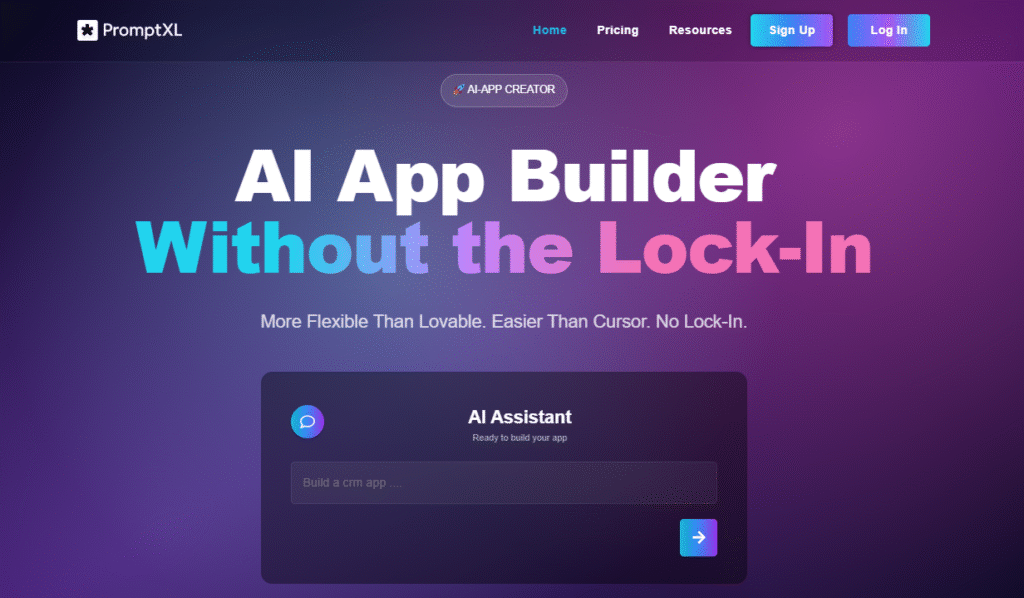
PromptXL is an AI-powered workflow platform designed to transform prompts into structured outputs, automated processes, and scalable digital projects. Unlike traditional no-code builders that focus mainly on visual interfaces, PromptXL centers its experience around intelligent workflow pipelines.
Developers and creators use PromptXL to build AI-driven systems that automate tasks such as content creation, structured data generation, and multi-step application logic. The platform combines modular prompt execution with automation-first architecture, allowing users to create reusable workflows that adapt to different project needs.
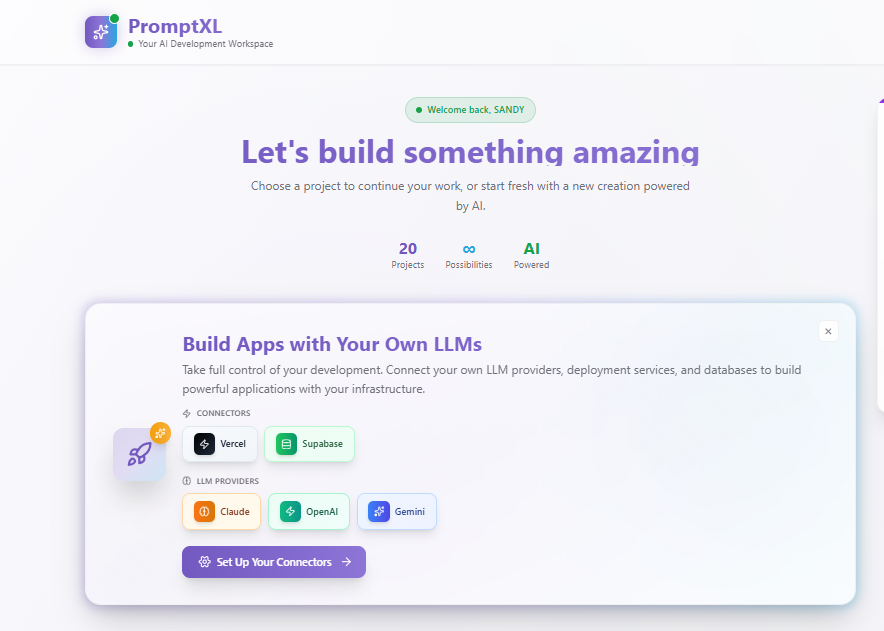
key points:
- AI-powered platform built for structured workflow automation, not just basic content generation.
- Converts simple prompts into scalable apps, workflows, and digital systems.
- Designed for creators, developers, and teams who want AI-first productivity.
- Supports modular prompt pipelines that can be reused across multiple projects.
- Helps reduce repetitive tasks through automation-focused execution.
- Provides context-aware outputs to maintain consistency across workflows.
- Suitable for SEO teams, startups, and product builders looking to scale AI operations.
- Combines planning, execution, and deployment inside a single AI workspace.
- Enables faster iteration by allowing users to refine prompts without rebuilding workflows.
- Built for long-term scalability rather than one-time no-code builds.
One of PromptXL’s strongest advantages is its ability to maintain context across tasks. Instead of treating each AI action separately, it connects prompts into logical chains that function like a programmable workflow. This makes it highly effective for teams building scalable AI projects rather than simple prototypes.
What Is ToolJet?
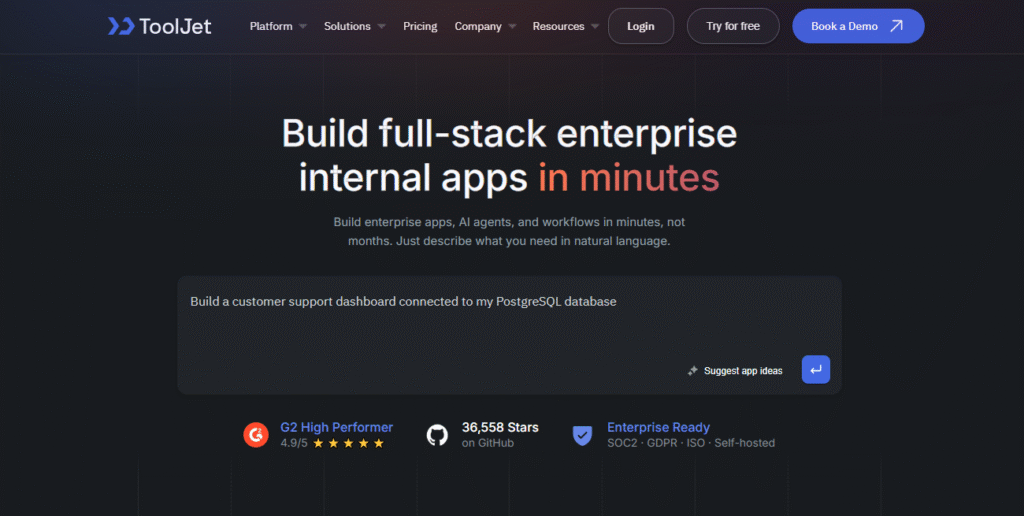
ToolJet is a low-code platform primarily designed for building internal tools, dashboards, and business applications. It provides developers with a visual interface to connect databases, APIs, and UI components while still allowing custom scripting when needed.
Unlike PromptXL, ToolJet focuses more on data-driven applications and enterprise workflows. It is often used to create admin panels, reporting dashboards, and operational tools for teams. With drag-and-drop components and API integrations, ToolJet enables developers to build functional applications without starting from scratch.
While ToolJet offers flexibility for developers familiar with databases and APIs, its workflow automation capabilities rely more on manual configuration compared to AI-first platforms like PromptXL.
Core Differences Between PromptXL and ToolJet
The biggest difference between PromptXL vs ToolJet lies in their philosophy.
PromptXL is built for AI-native development. It treats prompts as building blocks for creating intelligent workflows that can automate complex tasks. ToolJet, on the other hand, is designed as a low-code development environment that simplifies building internal business applications.
PromptXL emphasizes automation, structured execution, and AI-driven productivity, while ToolJet focuses on data integration, dashboard creation, and developer-friendly customization.
For teams looking to integrate AI deeply into their workflow, PromptXL offers a more advanced ecosystem. ToolJet works best for organizations needing traditional internal tools with customizable UI components.
Ease of Use and Learning Curve
Ease of use is an important factor when comparing no-code platforms.
PromptXL may feel slightly advanced at first because of its structured workflow system. However, once users understand how prompt pipelines work, the platform becomes extremely efficient for automating repetitive tasks. Its AI-guided process reduces manual configuration, which helps users build faster over time.
ToolJet provides a familiar interface for developers who already understand APIs, databases, or scripting. Beginners might find it less intuitive because some features require technical knowledge to set up effectively.
In short, PromptXL simplifies complex automation through AI guidance, while ToolJet provides flexibility but may require more technical setup.
AI Workflow Capabilities
One area where PromptXL clearly stands out is AI workflow automation.
The platform allows users to create reusable prompt modules, chain multiple actions together, and maintain context across tasks. This makes it ideal for building structured AI systems that handle large-scale operations.
ToolJet includes automation features but relies more on manual logic configuration. While this approach offers control, it may slow down development compared to PromptXL’s AI-driven execution model.
For developers focused on building intelligent systems rather than static tools, PromptXL offers a significant advantage.
PromptXL vs ToolJet – Customization and Flexibility
Customization plays a key role in deciding between these platforms.
PromptXL provides flexibility through modular workflows and AI integration. Users can design unique pipelines that adapt to different use cases, making it highly scalable for growing projects.
ToolJet excels in UI customization and database integration. Developers can connect multiple data sources and build tailored dashboards that match business requirements.
While ToolJet provides strong customization for internal applications, PromptXL offers greater flexibility for AI-driven automation and content workflows.
Collaboration and Team Productivity
Modern development platforms must support teamwork. PromptXL includes collaboration-focused features that allow teams to manage workflows, share prompt systems, and iterate projects together.
Because PromptXL keeps workflows structured and reusable, teams can maintain consistency across multiple projects without duplicating effort. This makes it highly efficient for organizations managing large-scale AI operations.
ToolJet also supports collaboration but is more focused on development teams building internal tools. Its collaboration features revolve around project management rather than AI workflow automation.
Performance and Scalability (PromptXL vs ToolJet)
When evaluating performance, PromptXL demonstrates strong advantages in automation efficiency. By reducing manual work through AI execution, it allows developers to focus on strategy rather than repetitive tasks.
The platform’s scalability comes from its modular workflow architecture. Users can expand projects without rebuilding systems from scratch, making it suitable for long-term growth.
ToolJet performs well for enterprise dashboards and data-heavy applications. However, scaling AI-driven workflows may require additional integrations compared to PromptXL’s built-in automation features.
Use Cases: Why Developers Choose PromptXL
Developers and creators often choose PromptXL for:
- Building AI-powered workflows and automation systems
- Creating scalable content or data pipelines
- Developing structured AI applications
- Managing complex prompt-based projects
- Increasing productivity with reusable workflows
PromptXL is especially valuable for teams transitioning toward AI-first development strategies.
Use Cases: When ToolJet Makes Sense
ToolJet is a strong choice for:
- Internal business tools
- Admin dashboards
- Database-driven applications
- Operational reporting systems
- Custom UI-driven workflows
Organizations needing structured data management may find ToolJet suitable for traditional low-code development.
Pricing and Long-Term Value : PromptXL vs ToolJet
While pricing models vary, long-term value depends on how much automation a platform provides.
PromptXL often delivers higher long-term efficiency because it reduces manual work through AI workflows. Teams building ongoing projects may find significant productivity gains over time.
ToolJet provides value for businesses focused on internal tool development. However, its manual configuration approach may require more effort compared to AI-native platforms.
PromptXL vs ToolJet : Why PromptXL Stands Out in 2026
The no-code AI market is shifting toward platforms that combine automation, scalability, and intelligent workflow management. PromptXL aligns strongly with this trend by offering an automation-first environment built around AI execution.
Its ability to transform prompts into structured systems makes it more future-ready compared to traditional low-code tools. For developers looking to move beyond static dashboards and into intelligent application building, PromptXL offers a clear advantage.
Final Verdict: PromptXL vs ToolJet
Choosing between PromptXL and ToolJet depends on your goals as a developer.
If you need a platform for building internal dashboards or database-driven applications, ToolJet provides solid functionality. However, if your focus is on AI automation, structured workflows, and scalable project execution, PromptXL emerges as the more powerful and forward-thinking solution.
For developers seeking a modern platform that blends AI intelligence with workflow automation, PromptXL stands out as the stronger choice in 2026.
🚀 Build Without Platform Limits
Create your project: https://app.promptxl.com
Learn more: https://promptxl.com
Build with real files, multi-LLM intelligence, and zero lock-in.