

Introduction
As businesses grow, their financial structures become more complex. Managing finances across subsidiaries, departments, regions, or legal entities can quickly turn into a challenging and error-prone process. This is where financial consolidation software becomes essential. For multi-entity organizations, accurate and timely financial consolidation is critical for compliance, decision-making, and strategic planning.
In this guide, we’ll explore what financial consolidation is, how it works, why it’s important for multi-entity organizations, key features, benefits, challenges, and how to choose the right solution for your business.
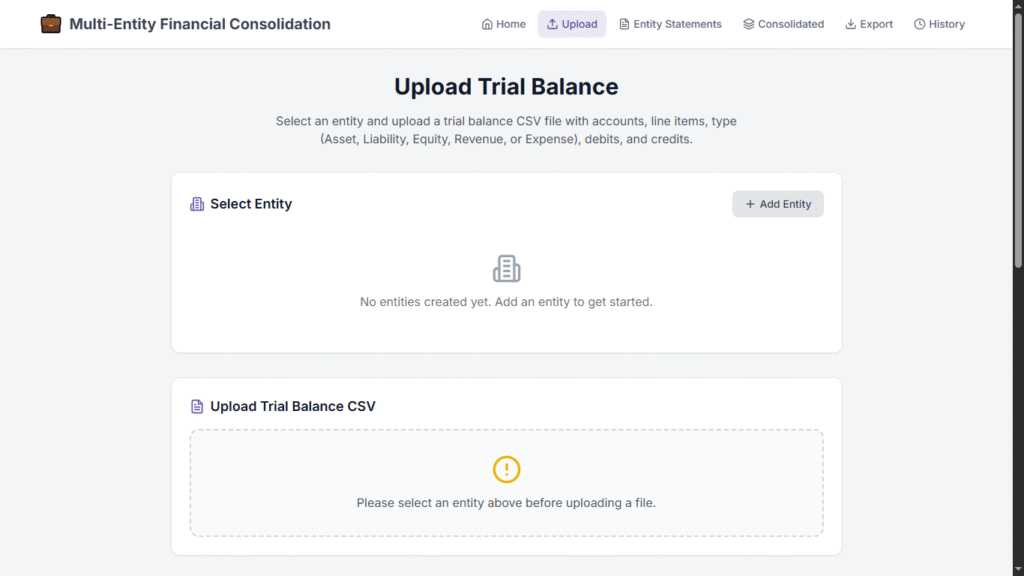
Click The App Link : Multi-Entity Financial Consolidation
What Is Financial Consolidation Software?
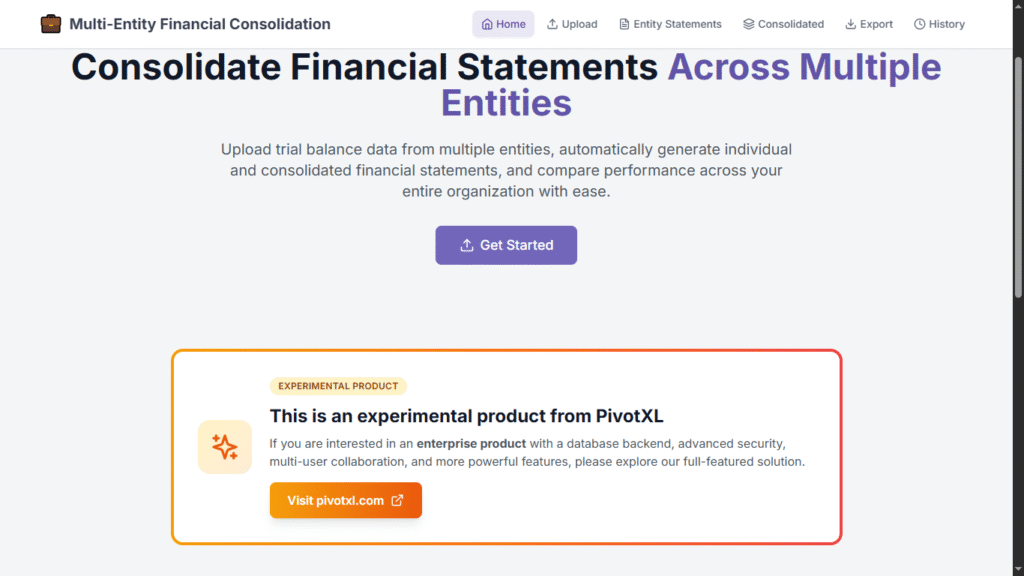
Financial consolidation is a system that collects, standardizes, and combines data from multiple entities into a single set of consolidated statements. These entities may include subsidiaries, branches, departments, or business units operating across different regions or currencies.
Instead of manually merging spreadsheets or relying on disconnected accounting systems, financial consolidation automates the entire consolidation process. This ensures accuracy, consistency, and compliance with accounting standards.
Understanding Financial Consolidation in Multi-Entity Organizations
Multi-entity organizations often operate with separate accounting systems, charts of accounts, and reporting requirements. Financial consolidation brings all this data together to provide a unified financial view of the organization.
What Financial Consolidation Includes
- Combining balance sheets, income statements, and cash flow statements
- Eliminating intercompany transactions
- Converting multiple currencies into a base currency
- Applying consistent accounting rules
- Generating consolidated financial reports
Without financial consolidation these tasks are time-consuming and highly prone to errors.
Why Financial Consolidation Software Is Essential
Manual consolidation using spreadsheets may work for small organizations, but it becomes unsustainable as the business grows. Financial consolidation solves many critical challenges.
Key Reasons to Use Financial Consolidation:
- Accuracy and Consistency
Automation reduces human errors and ensures uniform accounting rules. - Time Savings
Consolidation cycles that once took weeks can be completed in hours or days. - Regulatory Compliance
Ensures compliance with accounting standards and audit requirements. - Real-Time Visibility
Leaders gain faster insights into group financial performance. - Scalability
Easily supports new subsidiaries, entities, and regions.
How Financial Consolidation Software Works
Financial consolidation follows a structured process to produce accurate group financial statements.
Step 1: Data Collection
Financial data is imported from multiple accounting systems or ERPs used by different entities.
Step 2: Data Standardization
The software maps different charts of accounts into a standardized group structure.
Step 3: Currency Conversion
Foreign currency transactions are converted using predefined exchange rates.
Step 4: Intercompany Elimination
Transactions between related entities are identified and eliminated to avoid duplication.
Step 5: Consolidation
The system aggregates all validated data into consolidated financial statements.
Step 6: Reporting and Analysis
Users generate reports, dashboards, and compliance-ready financial statements.
Key Features of Financial Consolidation Software
A powerful financial consolidation solution includes features designed specifically for multi-entity environments.
1. Multi-Entity Management
Manage unlimited subsidiaries, divisions, and legal entities in one system.
2. Intercompany Elimination
Automatically identifies and removes intercompany balances and transactions.
3. Multi-Currency Support
Handles currency conversion with real-time or historical exchange rates.
4. Chart of Accounts Mapping
Aligns different accounting structures into a unified reporting format.
5. Automated Consolidation Rules
Applies predefined consolidation logic consistently across all entities.
6. Financial Reporting & Dashboards
Generates consolidated reports, variance analysis, and performance insights.
7. Audit Trails & Controls
Tracks changes, approvals, and adjustments for compliance and transparency.
Benefits of Financial Consolidation Software
Implementing financial consolidation delivers both operational and strategic advantages.
Faster Financial Close
Shorten monthly, quarterly, and annual close cycles.
Improved Data Accuracy
Reduce errors caused by manual data entry and spreadsheet formulas.
Better Decision-Making
Access real-time consolidated financial data for strategic planning.
Reduced Compliance Risk
Maintain accurate records and audit-ready financial statements.
Centralized Financial Control
Manage group-level finances from a single platform.
Financial Consolidation Challenges
Organizations that rely on manual processes face several challenges.
Spreadsheet Complexity
Large spreadsheets are difficult to maintain, audit, and update.
Data Inconsistencies
Different accounting methods lead to unreliable consolidated results.
Delayed Reporting
Manual consolidation slows down financial close and reporting cycles.
High Error Risk
Even small mistakes can significantly impact financial accuracy.
Financial consolidation eliminates these issues by automating and standardizing the process.
Financial Consolidation for Growing and Global Businesses
As businesses expand globally, financial consolidation becomes more complex.
Common Scenarios
- Multiple subsidiaries in different countries
- Operations in multiple currencies
- Diverse accounting standards and tax regulations
Financial consolidation provides centralized control while supporting local compliance requirements, making it ideal for international organizations.
Types of Financial Consolidation Software
Different organizations require different consolidation solutions.
Cloud-Based Financial Consolidation.
Accessible from anywhere, scalable, and cost-effective.
On-Premise Consolidation Systems
Preferred by organizations with strict data control requirements.
Enterprise Financial Consolidation Platforms
Designed for large organizations with complex reporting needs.
Mid-Market Consolidation Solutions
Ideal for growing businesses transitioning from spreadsheets.
How to Choose the Right Financial Consolidation Software
Selecting the right financial consolidation software is a strategic decision.
Key Evaluation Criteria
- Number of Entities Supported
Ensure the software scales with your organization. - Ease of Implementation
Quick setup reduces disruption to finance teams. - Integration Capabilities
Must integrate with existing accounting and ERP systems. - Automation Level
Look for automated eliminations, conversions, and validations. - Reporting Flexibility
Customizable reports and dashboards are essential. - Security & Compliance
Strong access controls and audit trails are mandatory.
Best Practices for Financial Consolidation
To maximize the value of financial consolidation software, follow these best practices:
- Standardize charts of accounts across entities
- Define clear intercompany rules
- Automate validation checks
- Perform regular reconciliations
- Train finance teams thoroughly
The Future of Financial Consolidation Software
Financial consolidation software continues to evolve with new technologies.
Emerging Trends
- AI-driven anomaly detection
- Predictive financial analytics
- Real-time consolidation
- Advanced visualization dashboards
Organizations adopting modern consolidation tools gain faster insights and stronger financial control.
Frequently Asked Questions (FAQs)
What is financial consolidation software used for?
Financial consolidation software is used to combine financial data from multiple entities into consolidated financial statements.
Who needs financial consolidation software?
Multi-entity organizations, holding companies, and global businesses benefit the most.
Can small businesses use financial consolidation software?
Yes, many scalable solutions are designed for growing and mid-sized organizations.
Does financial consolidation software support compliance?
Yes, it helps meet accounting standards and audit requirements.
Conclusion
Financial consolidation software is a critical solution for multi-entity organizations aiming to maintain accuracy, transparency, and efficiency in financial reporting. By automating consolidation processes, eliminating manual errors, and providing real-time financial visibility, it empowers finance teams to focus on strategy rather than spreadsheets.
As organizations grow in size and complexity, investing in the right financial consolidation software becomes not just beneficial—but essential for long-term success.
Built with speed, designed for trust
The application was built in minutes using PromptXL, yet it delivers production-grade usability and security. It demonstrates how modern AI-assisted tooling can create polished, real-world software quickly—without sacrificing quality.
🚀 Build Without Platform Limits
Create your project: https://app.promptxl.com
Learn more: https://promptxl.com