

Value Proposition Canvas Generator – click app link
Introduction
In today’s digital world, data is everywhere. Businesses, startups, researchers, and even individuals generate massive volumes of data every day. From customer transactions and website analytics to IoT device outputs and social media interactions, data has become one of the most valuable assets in modern decision-making. However, raw data alone has little value unless it is processed, analyzed, and transformed into actionable insights. This is where an AI Data Processor becomes essential.
An AI Data Processor is a smart tool powered by artificial intelligence that automates data cleaning, organization, analysis, and interpretation. Unlike traditional data processing systems that require manual intervention and complex programming, AI-powered processors can understand patterns, detect anomalies, and generate insights faster and more accurately. As businesses increasingly rely on data-driven strategies, AI data processing tools are becoming indispensable for efficiency, accuracy, and competitive advantage.
This article explores what an AI Data Processor is, how it works, its key benefits, applications across industries, challenges, and future trends shaping the world of intelligent data analysis.
What is an AI Data Processor?
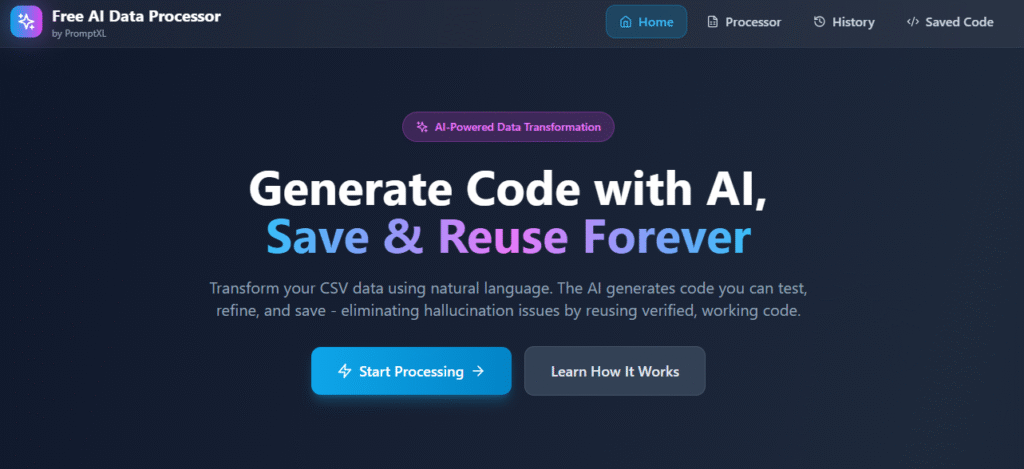
An AI Data Processor is software or a platform that uses artificial intelligence technologies such as machine learning, natural language processing, and predictive analytics to process and analyze large datasets automatically. It can perform tasks like:
- Data cleaning and preprocessing
- Pattern recognition
- Predictive analysis
- Data classification
- Automated reporting
- Insight generation
Traditional data processing often requires manual coding, data engineering expertise, and time-consuming analysis. AI data processors reduce this workload by automating repetitive tasks while improving speed and accuracy.
For example, an e-commerce company can use AI data processing to analyze customer purchasing behavior, predict future demand, and personalize product recommendations instantly.
How AI Data Processing Works
AI data processors typically follow a structured workflow:
1. Data Collection
Data is gathered from various sources such as databases, sensors, websites, CRM systems, or social media platforms. AI tools can integrate multiple data sources seamlessly.
2. Data Cleaning
Raw data often contains errors, duplicates, missing values, or inconsistencies. AI algorithms automatically detect and correct these issues, ensuring reliable analysis.
3. Data Transformation
The collected data is converted into formats suitable for analysis. This may include normalization, categorization, or feature extraction.
4. Analysis and Modeling
Machine learning models analyze patterns, correlations, and trends. These models can forecast outcomes, detect anomalies, or classify information.
5. Visualization and Reporting
AI processors generate dashboards, charts, and reports that help decision-makers interpret insights quickly.
This automated pipeline significantly reduces human effort and speeds up data-driven decision-making.
Key Benefits of AI Data Processors
1. Fast Data Analysis with AI Data Processor
AI tools can process huge datasets within seconds, something that would take humans hours or even days.
2. Improved Accuracy Using AI Data Processing
Machine learning models reduce human errors in data analysis, leading to more reliable insights.
3. Cost Savings Through AI Data Automation
Automation reduces the need for extensive manual labor and specialized data teams.
4. Real-Time Insights from AI Data Tools
Businesses can make instant decisions based on live data analysis.
5. Scalable AI Data Processing Solutions
AI processors easily handle increasing data volumes without significant infrastructure changes.
6.Predictive Analytics with AI Data Processor
AI doesn’t just analyze past data; it predicts future trends and outcomes.
Applications of AI Data Processing
AI data processors are transforming multiple industries.
Business and Marketing
Companies use AI data processing for customer segmentation, marketing automation, and sales forecasting. This improves targeting and increases revenue.
Healthcare
AI helps analyze patient records, medical images, and clinical data, assisting in diagnosis and treatment planning.
Finance
Banks use AI data processors for fraud detection, risk assessment, and algorithmic trading.
Manufacturing
Predictive maintenance powered by AI prevents equipment failures and improves operational efficiency.
Retail and E-Commerce
AI analyzes customer preferences, inventory trends, and purchasing patterns to optimize operations.
Education
AI helps analyze student performance data, enabling personalized learning experiences.
AI Data Processing vs Traditional Data Processing
| Feature | Traditional Processing | AI Data Processing |
|---|---|---|
| Speed | Slow | Very fast |
| Automation | Limited | Highly automated |
| Accuracy | Human-dependent | High accuracy |
| Scalability | Limited | Easily scalable |
| Predictive Analysis | Rare | Common |
| Real-Time Insights | Difficult | Easily achievable |
Key Technologies Behind AI Data Processors
Several advanced technologies power AI data processing systems.
Machine Learning
Algorithms learn from data patterns to improve predictions over time.
Natural Language Processing (NLP)
Enables understanding of text data like emails, reviews, or documents.
Big Data Technologies
Tools such as distributed computing frameworks handle massive datasets efficiently.
Cloud Computing
Provides scalable storage and computing power for AI processing.
Deep Learning
Neural networks help analyze complex data like images, videos, and speech.
These technologies work together to create intelligent data processing solutions.
Challenges in AI Data Processing
Despite its advantages, AI data processing comes with challenges.
Data Privacy Concerns
Handling sensitive data requires strict security and compliance measures.
Data Quality Issues
Poor-quality data can lead to inaccurate AI predictions.
Implementation Costs
Initial setup and training can be expensive.
Skill Requirements
Organizations need skilled professionals to manage AI systems.
Ethical Concerns
Bias in data can lead to unfair outcomes.
Addressing these challenges is crucial for successful AI adoption.
Best Practices for Using AI Data Processors
To maximize benefits:
- Ensure high-quality data collection
- Maintain data security standards
- Regularly update AI models
- Monitor system performance
- Train employees on AI tools
- Start with pilot projects before scaling
Following these practices helps organizations achieve better results.
Future Trends in AI Data Processing
The future of AI data processing looks promising.
Automated Decision Intelligence
AI will increasingly make decisions without human intervention.
Edge AI Processing
Data will be processed closer to the source, reducing latency.
Explainable AI
Systems will provide transparent explanations for decisions.
Integration with IoT
AI will process data from billions of connected devices.
AI Democratization
More user-friendly tools will make AI accessible to non-experts.
These trends will shape how businesses leverage data in the coming years.
Why Businesses Should Adopt AI Data Processing
Organizations that adopt AI data processors gain a competitive edge:
- Faster innovation
- Better customer insights
- Improved operational efficiency
- Enhanced decision-making accuracy
- Cost optimization
Companies ignoring AI risk falling behind competitors who leverage intelligent data analysis.
Selecting the Right AI Data Processor
When choosing an AI data processing tool, consider:
- Ease of use
- Integration capabilities
- Scalability
- Security features
- Cost-effectiveness
- Vendor support
Evaluating these factors ensures a successful implementation.
Case Study Example
Imagine a retail company struggling with inventory management. Using an AI data processor:
- Sales data is analyzed in real time
- Demand forecasts improve accuracy
- Overstock and shortages reduce
- Customer satisfaction increases
This demonstrates how AI data processing drives tangible business value.
Conclusion
The rapid growth of data has made intelligent data processing essential. An AI Data Processor provides a powerful solution for organizations seeking faster, smarter, and more accurate data analysis. By automating complex tasks, improving efficiency, and enabling predictive insights, AI data processors transform how businesses operate.
From healthcare and finance to marketing and education, AI-powered data analysis is reshaping industries worldwide. While challenges such as data privacy, implementation costs, and ethical concerns exist, the benefits far outweigh the risks when implemented responsibly.
As technology continues to evolve, AI data processors will become more accessible, powerful, and integral to everyday operations. Businesses and professionals who embrace these tools today will be better prepared for tomorrow’s data-driven world.
🚀 Build Your Own AI PDF Summarizer
Create your project: https://app.promptxl.com
Learn more: https://promptxl.com
Build real AI tools with full control, real files, and multi-LLM intelligence.
If you want to explore more free AI tools, check out the PromptXL Marketplace:
https://app-market.promptxl.com/
Build real AI tools with full control, real files, and multi-LLM intelligence.